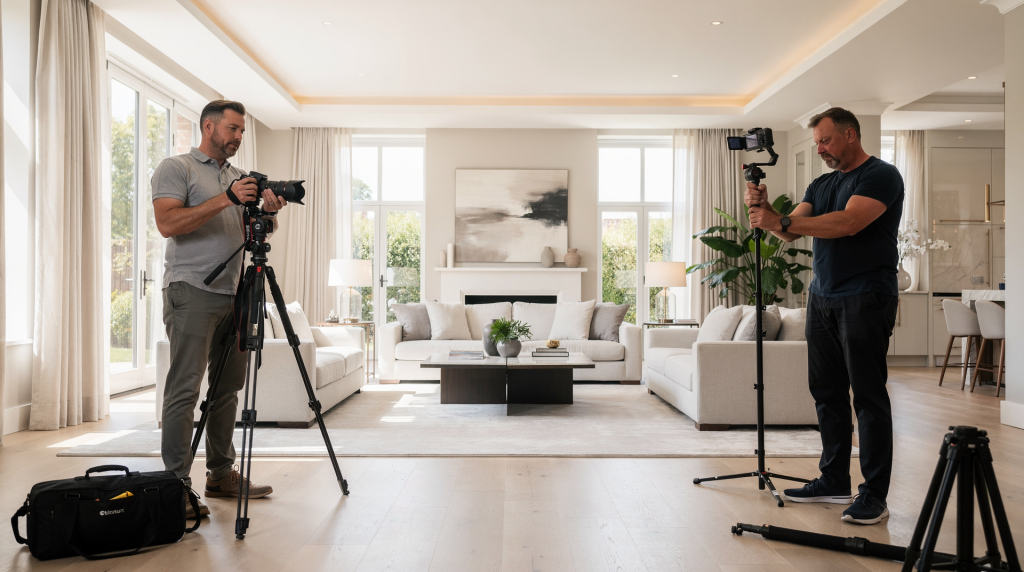
When the goal is to move a listing, not just fill a gallery, the package must be built around the assets it produces — not the hours spent on site. The most effective photography and video bundles combine strong stills, the right motion formats, and practical add-ons tailored to the property type and the platforms where buyers will see them.
What a property marketing package really includes
A real estate media package is never a single product. It’s a deliberately assembled set of assets designed for different buyer touchpoints: the MLS, listing portals, social feeds, email campaigns, agent branding, and occasionally paid ads. In practice, that means a mix of still photography, video, aerial coverage, floor plans, and short-form edits built for specific channels.
From my own shift out of general video production into property work, the biggest lesson was this: you’re not just documenting a space — you’re giving a buyer the tools to make a decision remotely. That means every frame, every clip, and every format has a job. For standard residential listings, photo-only packages in the U.S. often start around $150 to $350, while more complete photo-and-video packages climb higher depending on scope and add-ons. Basic video walkthroughs commonly begin near $200, with more advanced cinematic edits reaching $600+, and premium campaigns pushing well beyond that.
Why bundled media performs better than single-format content
A listing rarely sells on one asset alone. Buyers notice the main photo first, then scan the rest of the gallery, and only then decide whether to click a video, check the location, or request a showing. A strong package therefore has to do three things simultaneously: make the home look credible and inviting, answer practical questions quickly, and create enough visual momentum to keep the buyer engaged.
Stills on their own can work for smaller or simpler properties, but video earns its place the moment a home has a meaningful layout, views, outdoor amenities, or a premium price point. Motion lets you reveal spatial flow — how the kitchen opens into the living area, how natural light moves across a room — in a way that even a well-shot photo gallery cannot. Drone coverage adds context for land, neighborhood positioning, and approach, while social cuts turn a single shoot into multiple marketing assets that work across Reels, Shorts, and Stories. When I plan a bundled shoot, I’m already thinking about the vertical crop for Instagram and the horizontal edit for YouTube, because the framing decisions made on site directly affect how usable the footage will be later.
Common package types and when to use them
1. Photo-only package
This is the simplest option and usually the starting point for most listings. Typical deliverables include interior and exterior photos, light editing, and MLS-ready delivery. I treat these shoots as a fast, clean capture of the property’s best angles — wide enough to show spatial relationships, but tight enough to avoid distortion that misleads buyers.
Best for:
- rental listings
- lower-priced homes
- straightforward floor plans
- fast-turnaround marketing
Typical market range:
- about $150 to $300 for standard packages
- often around 25 to 40 HDR photos for a standard listing
- some providers sell by image count rather than by package
2. Photo + video package
This is the most useful middle ground for many agents. It usually includes a still photo set plus a walkthrough film or short cinematic edit. The video component doesn’t have to be long — a 60- to 90-second walkthrough that moves through the home at a calm, deliberate pace often outperforms a lengthy tour. I always shoot with a gimbal and prioritize smooth, linear movement that mirrors how a buyer would actually walk through the space.
Best for:
- mid-market homes
- newer listings that need more online attention
- agents who want usable content for social media
- properties with standout interiors or flow
Typical market range:
- roughly $300 to $900 depending on the deliverables and polish
- simple walkthroughs often begin around $200
- more advanced cinematic packages can exceed $600
3. Premium or luxury marketing package
This is the format for high-end listings where presentation quality directly affects perceived value. These packages usually combine photography, cinematic video, drone, twilight work, and social-ready clips. The difference isn’t just more gear — it’s a more deliberate approach to light and pacing. Twilight exteriors, for example, require precise timing and often multiple exposures to balance warm interior glow with the fading sky. Drone shots are planned to reveal scale and surroundings, not just to add an aerial gimmick.
Best for:
- luxury homes
- estate properties
- waterfront or view properties
- listings where branding matters as much as the sale
Typical market range:
- premium packages with drone and twilight often land around $300 to $500 or more
- luxury campaigns can run from $1,200 to $5,000+, with full-service packages going even higher
What should be inside each package
A strong package is built from clear deliverables, not vague promises. Here’s a practical reference I use when structuring offers for agents and developers.
| Deliverable | What it does | When it matters most |
|---|---|---|
| Interior and exterior photography | Creates the core listing gallery | Almost every property |
| Drone photos/video | Shows lot size, setting, views, and access | Large lots, premium homes, scenic locations |
| Video walkthrough | Helps buyers understand layout and flow | Most listings, especially mid-range and luxury |
| Social media clips | Gives agents content for Reels, Shorts, and Stories | Social-first marketing campaigns |
| Twilight images | Adds drama and curb appeal | Luxury listings, waterfront homes, architecturally strong exteriors |
| Floor plan | Clarifies circulation and room relationships | Homes with unusual layouts or larger square footage |
| Virtual staging | Helps unfurnished or vacant rooms feel livable | Vacant homes, new construction, difficult spaces |
How to choose the right package for the property
The right package depends on the property, the audience, and the marketing goal. A good rule is to match the media to what makes the home sell — not to what feels impressive in a portfolio. I always ask: what does this buyer need to see to feel confident enough to book a showing?
Use a photo-only package when:
- the property is simple and easy to understand
- the listing price does not justify heavier production
- the seller wants efficient, clean marketing
- the home already photographs well in daylight
Use a photo + video package when:
- the layout matters
- the home has a strong flow that stills cannot show
- the agent wants more listing engagement
- the property needs both MLS assets and social content
Use a premium package when:
- the home is high-value
- the property has features that benefit from motion and context
- the listing needs to stand out in a crowded market
- the agent’s brand is part of the sales strategy
A practical package-building framework
If you’re creating packages for clients, structure them around outcomes instead of gear. That makes the offer easier to understand and easier to sell. Here’s a framework I’ve refined over years of shooting everything from compact condos to sprawling estates.
Starter package
Include:
- 20 to 30 edited photos
- MLS-ready delivery
- basic sky replacement or tonal correction if needed
Best for:
- smaller homes
- rental or budget-conscious listings
- fast listing launches
Growth package
Include:
- 30 to 40 edited photos
- walkthrough video
- short vertical social cut
- basic drone or exterior context if relevant
Best for:
- standard family homes
- agents who want consistent marketing assets
- listings that need stronger digital reach
Signature package
Include:
- 40+ photos
- cinematic walkthrough
- drone photos/video
- twilight images
- social cuts
- optional floor plan or virtual staging
Best for:
- luxury homes
- design-forward properties
- sellers who expect a premium presentation
Pricing factors that should change the quote
Not every listing should be priced the same. These are the main variables that affect cost, and I’ve learned to price them transparently rather than burying them in a flat fee:
- property size
- number of final images
- amount of editing (color grading, object removal, advanced retouching)
- drone access and licensing requirements
- travel time
- twilight scheduling (which often means a second site visit)
- video length and complexity
- same-day or rush delivery
- usage rights and licensing terms
A common mistake is pricing only by the shoot time. In reality, editing, organization, delivery, and revisions can take as much time as the session itself — sometimes more. A 2-hour shoot can easily generate 4–6 hours of post-production when you factor in HDR blending, color consistency across a full gallery, and trimming a walkthrough to a tight, engaging edit.
Mistakes that weaken property marketing packages
1. Overloading the package with extras
Too many add-ons make the offer confusing. Buyers and agents usually want clarity, not a long menu. I’ve seen packages fail because they tried to include everything — drone, twilight, 3D tour, floor plan, and five video edits — without a clear story about why each piece matters for that specific property.
2. Selling video without a reason
Video is not automatically valuable for every listing. It works best when it improves understanding, emotion, or distribution. A cramped studio apartment with no view rarely benefits from a walkthrough; a family home with an open-plan living area almost always does.
3. Ignoring format differences
MLS, website embeds, Instagram Reels, and YouTube do not use the same crop or length. A good package plans for horizontal and vertical output from the start. I often shoot a scene slightly wider than needed so I can reframe for 9:16 without losing essential context.
4. Underestimating editing time
The shoot is only half the job. Color correction, sequencing, curation, and file delivery are part of the product. Rushed editing shows — inconsistent white balance or jarring cuts can undermine the trust a buyer places in the visuals.
5. Leaving usage rights vague
If the package includes video for social media or paid ads, the license terms should be clear before delivery. I’ve had agents assume they could run a walkthrough as a Facebook ad indefinitely, only to realize the original license covered organic use only. Spell it out.
How to evaluate a package before buying
Use this checklist before you approve a quote or build a service tier:
- Does the package match the property price and type?
- Are the deliverables clearly listed?
- Is video included, and if so, in what format and length?
- Are drone, twilight, and floor plans extra or included?
- Does the package include vertical versions for social media?
- How fast is delivery?
- Are licensing and usage rights clear?
- Is retouching or revision policy specified?
Best package combinations by property type
| Property type | Recommended package | Why |
|---|---|---|
| Entry-level condo | Photo-only or light photo + video | Keeps cost aligned with market value |
| Family home | Photo + walkthrough video | Helps buyers understand layout and flow |
| Scenic property | Photo + drone + video | Shows location and surroundings |
| Luxury listing | Premium package | Presentation quality directly affects perception |
| Vacant home | Photo + video + virtual staging | Makes rooms feel livable and easier to read |
FAQ
What is included in a real estate photography package?
Most packages include edited interior and exterior photos, and higher tiers may add drone coverage, video walkthroughs, floor plans, twilight images, or social media clips. The exact mix should reflect the property’s selling points — a condo in the city rarely needs drone shots, while a rural estate almost always does.
How much should a real estate video package cost?
Basic walkthrough packages often start around $200, while more complete cinematic packages can run from $600 to $1,500 or more depending on scope and add-ons. The price typically scales with the number of finished minutes, the complexity of the edit, and whether drone or twilight work is included.
Is a photo-and-video package worth it?
Yes, when the property benefits from motion, layout explanation, or stronger social distribution. It is especially useful for mid-range and luxury listings. The video doesn’t have to be a short film — even a 45-second walkthrough can significantly increase the time a buyer spends on a listing page.
What is the best package for luxury real estate?
A premium package with high-end photography, cinematic video, drone coverage, twilight images, and social-ready cuts usually fits luxury listings best. The goal is to create a cohesive visual narrative that matches the property’s price point and the expectations of discerning buyers.
Should drone be included in every package?
No. Drone coverage is most useful when the lot, view, or location adds selling value. For smaller urban properties or condos where the exterior context is minimal, it may not be necessary. I only recommend it when the aerial perspective tells a story the ground-level shots cannot.
Final takeaway
The best photography and video package for property marketing is the one that matches the listing’s goals, price point, and buyer behavior. Start with the core visual story, then add video, drone, and social deliverables only when they strengthen the result rather than inflate the quote.
A good package doesn’t just make the property look better. It makes the listing easier to understand, easier to share, and easier to remember. That’s the standard I aim for on every shoot — because when the visuals do their job, the property sells itself faster.